
September 1st 2026 marked the 80th birthday of one of the most acclaimed songwriters of all time, Sir Barry Gibb of the Bee Gees. I wanted to do something special, and given I’d already done a deep dive ranking of every Bee Gees album a few years ago, I settled on the “80 @ 80” concept: the 80 greatest songs written or co-written by Barry.
Well, easier said than done when you’re looking at a library of songs that’s in the thousands rather than mere hundreds. Pulling from his work with his brothers Robin and Maurice in the Bee Gees, as well as younger brother Andy, and also including solo albums and outside projects for other artists, the Gibb brothers catalogue is one of the largest, most diverse and most commercially successful in all of music.
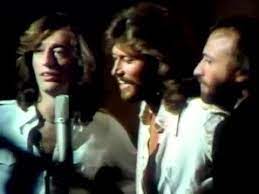
And while these songs aren’t necessarily the same as what a list of my 80 favourites would look like, they are the 80 Gibb songs I believe to be the greatest. Which is of course highly subjective! So wade in and have your say. Trust me when I say there are literally dozens of songs that I can’t believe I couldn’t find room for in the top 80. But that’s a good problem to have, and something very few artists – even fellow A-list songwriters – would have.
Most importantly, enjoy discovering or rediscovering this music. Maybe even listening to songs you’ve heard a million times with new ears. Beginning in reverse order with songs 71-80, put the kettle on, turn the stereo up and enjoy some of the finest popular music ever made. Happy birthday Barry.
80: One (1989 – Barry, Robin & Maurice Gibb)
Slick, breezy and with a plunging Nathan East bassline and a chorus so accessible it’s easy to miss the details, One was the Bee Gees’ biggest American hit of the 80s (as performers) and the group’s final US top 10 single.
Key Moment: At the 2:37 mark there’s a wild little synth and bass run that’s reminiscent of the famed palindromic bass solo in Paul Simon’s You Can Call Me Al (1986). This exits the dreamy post-chorus middle eight of “ah, we are one” to return to the main verse melody, and once you realise it’s part of not one but two different melodic deviations in the song (the other being the second bridge of “You know my life is in your hands”), you realise never to underestimate One again.
Key Lyric: The surprising spirituality of, “Every breath you take is planned / And all this love goes on forever”.
79: Had A Lot Of Love Last Night (1974 – Barry, Robin & Maurice Gibb)
1974’s Arif Mardin-produced Mr Natural LP may not have been a commercial success, but it paved the way for the group’s record-annihilating overhaul that began on the following year’s Main Course with songs like Jive Talkin’ and Nights On Broadway. And while that stylistic shift is more associated with the dance floor, in many ways it’s as much about R&B and gospel-influenced ballads like this extremely pretty lament.
Key Moment / Key Lyric: Against a backdrop of churchy, identifiably three-part harmonies with Robin and Maurice, Barry’s soulful lead contains a lyric as devastating as any the brothers unleashed in this phase of their career: “Fate no longer has the faith to walk ahead of me”. Damn, Barry! Dylan, Simon and Springsteen would be proud.
78: Shape Of Things To Come (1988 – Barry, Robin & Maurice Gibb)
A leftover from the sessions for the One album (1989), Shape Of Things To Come is one of the Bee Gees’ many great post-70s what if’s. While it found a home on the 1988 Olympic Games album, Shape wasn’t a priority up against Whitney Houston’s One Moment In Time (especially when you consider the Olympics album was an Arista release and Whitney was Arista’s queen). A shame, because Shape is a ripping pop/rock track with Barry switching between his natural voice and falsetto in thrilling style for the verses and pre-chorus. The chorus almost sounds like Maurice on some words, but is Barry and Robin in unison. Should’ve been a smash, and what a followup to You Win Again it would’ve been.
Key Moment / Key Lyric: The brothers might be known for harmonies, but listen for that Barry and Robin unison singing on the chorus of “It’s a brave new world / you’ve got to be a lover”. The hook is huge and when placed alongside Barry’s natural voice, Barry’s falsetto, and Robin’s upper register natural voice (heard on the line “God bless you and me”), it has the effect of giving Shape four different lead vocal stylings.
Tip: Given Shape doesn’t yet exist on streaming services, if you’re listening via YouTube, make sure to go for the 1988 Olympic games version. On that mix there’s distant, distinct sax solo in the intro that encapsulates the mood of the opening line, “There was a time in history,” suggesting this is as being a tale of long, long ago. Frustratingly, when Shape belatedly made it on to One as a bonus track on the limited edition 5-CD, The Warner Bros. Years 1987-1991 box set (2014, not available on streaming services), the sax was gone. The word is it may’ve been a copyright issue, and so an earlier mix of Shape was issued rather than the completed version from the Olympics album.
77: We’re The Bunburys (1986 – Barry Gibb & David English)
In a career as long and prolific as the Gibbs’, there are going to be some curious paths wandered, and I love that amidst all the solo albums, outside projects and reformed Bee Gees albums of the mid-to-late 80s onwards there comes a children’s cartoon of cricket-playing rabbits. In effect an alter-ego for the Bee Gees, The Bunbury’s was the creation of lifelong Gibb friend, David English, who co-wrote the lead single, We’re The Bunbury’s with Barry. Ostensibly a children’s song from a chirpy children’s television show, Barry still can’t help but churn out a gorgeous melody sitting above a gentle Caribbean shuffle.
Key Moment / Key Lyric: The little shot of Bee Gees’ glory at the 1:29 mark as the harmonies kick in over the hook of “All those starry nights / all those sunny days”.
76: Mr Natural (1974 – Barry & Robin Gibb)
In what would be the last Robin lead on a Bee Gees single for more than a decade, his vibrato soars with an assuredness to rank it up there with his all-time top performances. And so yes, the R&B-tinged Mr Natural always feels like a Robin song, but so much of what makes it great is that it also employs the Gibb Ace card of alternating Barry/Robin leads, alongside three-part harmonies with Maurice. Sadly, Mr Natural remains mostly unknown except for in Australia where it reached the top 20 (on the back of a sellout tour), and Venezuela, where it topped the charts.
Key Lyric: There are some standout, unusual lyrical images in Mr Natural, the most memorable being, “Rusty rainbows / that’s how the pain goes”. But it’s those harmonies on “That a love that is lost / can never be found agaaaaaaaaaiiiiiiiiinnnnn” that are the song’s calling card. You can see why producer Arif Mardin was so taken by his new act.
Key Moment: Pay attention to the fadeout and hear Maurice – not Barry – for some echoed falsetto ad-libs on the “come on baby” line. This barely gets mentioned, but given in just 12-18 months Maurice would sometimes be handling Barry’s “blamin’ it all” falsetto ad-libs for live performances of Nights On Broadway (with Barry’s natural voice needed to carry the live melody line), this strengthens the oft-told yarn that Arif asked if any of the brothers could “scream in tune”.
Now that story is folklore and is always about the following year’s Nights On Broadway and how it was Barry who put his hand up and there’s no doubt that’s true. There’s also no doubt Barry’s singular falsetto was a seismic breakthrough that changed the course of the Bee Gees’ career, lives and perhaps even 70s pop music in general. But it’s also possible Arif had first broached the idea of end-of-song falsetto ad-libs a year earlier than those hugely consequential Main Course sessions.
75: (Love Is) Thicker Than Water (1977 – Barry & Andy Gibb)
There are dark horse, slip-through-the-cracks 70s number ones, and then there’s (Love Is) Thicker Than Water. One of the 10 biggest singles in America of 1978, when was the last time you heard this on the radio? Criminal! And it’s not like it can be dismissed as merely a “momentum number one” – it was just the younger Gibb brother Andy’s second single and the middle chart-topper of a record-breaking run of three straight off the bat. Nor could it be minimised as just another disco hit in the peak of the disco craze, because have you listened to this song?
It’s more soft rock than anything else with near a capella verses and none other than newly-minted Eagle Joe Walsh all over it with lead guitar lines both dexterous and subtle.
Key Moment / Key Lyric: The entire last 90 seconds. As far as instrumental outros in the entire Bee Gees and Andy Gibb cannon go, it’s almost up there with Spirits (Having Flown) for beauty bordering on the hypnotic.
74: Come Home Johnny Bridie (1973 – Barry Gibb)
A rousing country singalong, Come Home Johnny Bridie’s chorus – and it is a big chorus – does its best to mask the fact that lyrically this is a murder ballad. From the Bee Gees’ 1973 LP Life In A Tin Can, it’s one of two tracks on the album to feature legendary pedal steel guitar player Sneaky Pete Kleinow (the other being the outstanding South Dakota Morning).
Kleinow’s resume includes everyone from the Rolling Stones to Linda Rodstadt, the Eagles, Stevie Wonder, Joe Cocker and Leonard Cohen, not to mention his own band, the Flying Burrito Brothers. His presence is an indicator of the sincere inspiration and appreciation the Bee Gees had for Americana, suggesting that right before the Gibbs would be topping global charts with another American genre, R&B, they were heading in a different, but albeit still American, direction.
Key Moment / Key Lyric: “Everybody said the kid’s no good” is a hark back to Barry’s equally country and Americana-infused unreleased 1970 solo album of the same name. But beyond that, every line in Johnny Bridie is telling a surprisingly direct yarn of a someone who’s spent years on the run having been wrongly accused of murder. And with a chorus so catchy you could imagine belting it out arm-in-arm around a campfire.
73: Victim (1970 – Barry Gibb)
When the Bee Gees briefly split up as the 60s gave way to the 70s, each of the brothers pursued solo projects, the majority of which would be abandoned when they reunited at the end of 1970. This included Barry’s The Kid’s No Good – an album that’s been heavily bootlegged but never officially released. But as heavy as that bootlegging may’ve been, most of the world has still never heard these songs. And as always when talking about the dusty, boxed-away corners of the Gibb catalogue, there’s a trove of standout tracks that diehard fans have long been calling for resurrection. Victim is right near the top of that list.
Leaning heavily into the Americana sound that dominated the 1969-recorded, 1970-released Cucumber Castle album (recorded by the two-man Bee Gees after Robin’s departure), The Kid’s No Good’s strongest tracks are head-scratchingly good. As in, how do you sit on songs like this? It wasn’t just Barry. Maurice’s unreleased album from this era, The Loner, had some terrific tracks, as did Robin’s Sing Slowly Sisters (posthumously released 2015). But when the brothers reconciled with new material as fully realised and commercial as future classics Lonely Days and How Can You Mend A Broken Heart, they chose to move forward, leaving songs like Victim in the vault.
Key Lyric: “For who can mend a broken heart” suggests that while the brothers did move forward, there’s a bit of Victim’s DNA* in the following year’s How Can You Mend A Broken Heart. Both songs were written only months apart, both have an American sensibility, both have patient, pretty melodies, both have pathos, both have stirring Bill Shepherd string arrangements, and one is buried, and one topped the US charts for an entire month.
Key Moment: There’s an overlapping vocal fry prior to the chorus that’s really a world-weary sigh; a tell that there’s an unarticulated sadness beyond what’s being sung. That Victim is a song of inner torment isn’t in doubt, but it’s what’s imagined – the gaps the listener fills in – where the magic lies. Is there something sinister at play on those dark, dirty, echoing streets too?
*I can’t decide if I should apologise for this pun or shout it from the rooftops.
72: I Love You Too Much (1983 – Barry, Robin & Maurice Gibb)
Most music fans – including some Bee Gees fans – have either forgotten or are completely unaware there was a sequel to Saturday Night Fever some six years after the fact named Staying Alive. Forgotten sequels are nothing new, but forgotten sequels that were in the top five highest grossing films of the year (5th in 1983 with US $126 million, behind only Return Of The Jedi, Flashdance, Octopussy, and Never Say Never Again) and yielded soundtracks that sold roughly 5 million copies? Now that is unusual. But in many ways it sums up the Bee Gees’ career – it’s never quite what you think it was.
Sure, by most assessments of those who do actually recall both film and soundtrack, Staying Alive was no Saturday Night Fever. The movie was directed by Slyvester Stallone, was in a different tonal universe from the original, and the new songs contributed by the Gibbs were – according to the brothers themselves – misused in the film. “Rocky in leg-warmers” was how the Bee Gees later dismissed Staying Alive and it’s clear it wasn’t a happy experience for them. But what of the music itself?
The dance-floor-targeting Woman In You might’ve been the US top 40 hit for the Bee Gees, and the ambling Someone Belonging To Someone might’ve caught on in South America, but it’s the pair of midtempo tracks, Life Goes On and I Love You Too Much, that were the soundtrack’s most impressive. And of those two, I Love You Too Much’s seductive, tumbling chorus gives it the nod.
Key Moment / Lyric: One of the deepest-sung Bee Gees choruses ever has a nice lyrical twist of “over you is where I should be”, that then switches to “under me is where you should be”. Father and son Bee Gees podcasters, Cristiano and Stuart of Words – The Bee Gees Podcast – were perceptive in pointing out in a recent episode that I Love You Too Much could’ve made for an arresting, teen-idol-shedding moment for brother Andy if he’d recorded it. But as it stands, it’s still an excellent, underrated piece of early 80s pop/R&B.
71: Bury Me Down By The River (1970 – Barry & Maurice Gibb)
There’s a meeting point of country and soul with perhaps the most obvious example being Gladys Knight & The Pips taking a straight up country song – Jim Weatherly’s Midnight Plane To Houston – and turning it into the soul staple Midnight Train To Georgia in 1973. The Commodores would do it at the end of the decade with genre-bending top 10 hits like 1979’s Sail On. And 10 years earlier, the two-man Bee Gees of Barry and Maurice (minus Robin) would devote almost an entire LP to this hybrid, Cucumber Castle (recorded 1969, released 1970).
Cucumber Castle’s best known song is the multi-million-selling smash Don’t Forget To Remember – a very Jim Reeves-esque country ballad that reached UK #2 and topped the charts in at least half a dozen countries. The jaunty I.O.I.O was also a top 10 everywhere from Argentina and Brazil, to New Zealand and Spain, while the violin-adorned Sweetheart became a decent-sized hit in the hands of Englebert Humperdinck. A further single, the whimsical If Only I Had My Mind On Something Else, might’ve missed the charts, but it too was extremely pretty.
But it’s the album tracks that make Cucumber Castle one of the most rewarding deep dives in the Bee Gees story with Barry’s voice never sounding better, nor more soulful. Then You Left Me, I Lay Down And Die, The Chance Of Love, The Lord and Bury Me Down By The River all have elements of soul, while sonically taking from country and Americana. Or more specifically in the case of Bury Me Down By The River, gospel.
Aided by background vocals from P.P. Arnold (who Barry was producing at the time), Bury Me Down By The River is a tale of a condemned man hoping that his death will set free. Set to a belt-it-from-the-pews melody, of course.
Key Moment / Lyric: “All I own is my life” is a brilliant, succinct line, while the staggered pleas of “let me lay my head” in the song’s crescendo are as stirring as they’re desolate.
Songs 61-70 coming soon.
